
A complete analysis of Evolution AB
A synthesis à la Munger.

Disclaimer
Dear readers, as we embark on this exploration of Evolution AB, I'd like to offer a brief introduction with a note of humility. At 17 years old, I am acutely aware that my 'long time' spent in the world of investing may is not extensive in the broader landscape of financial expertise. I invite you to approach my analysis with a healthy dose of skepticism, considering my youth in the field.
This write-up, while inspired by the works of respected analysts whom I greatly admire, is not merely a repetition of their insights. My intention is to synthesize the valuable information I've gathered from various sources, infusing it with my own perspective, much like a student learning from masters and trying to add a personal touch to their teachings (a nod to Munger's approach)
Included here is a list of exceptional research and resources on Evolution AB that have informed my understanding and analysis. I encourage open and honest feedback, and I am eager to learn from any corrections or insights you might offer. Together, let's delve into an informed discussion about this intriguing company.
● Ali Gündüz (EVO expert)
● Evolution AB: Leading the iGaming Revolution
● SVN Capital Evolution: The Leader in Live Casino
● Evolution AB: Market Leader With Strong Unit Economics Trading Near Trough Multiple
● THE WOLF OF HARCOURT STREET: Evolution AB Investment Thesis
● StockOpine: Evolution AB – A ‘sin’ stock with healthy returns
● EQ Research: Evolution Gaming: Part 1 Of Deep Dive Into A Live Casino Gaming Powerhouse
● EQ Research: Evolution Gaming: Part 2 Of Deep Dive Into A Live Casino Gaming Powerhouse
● Fundasy Investor: Evolution Gaming: A Moat Analysis
● Youtube Material (Interviews)
○
○
○
○
○
○
○
○
○
○
○
○
○
○ Podcast by Pierre Lindh #70 - Jonas Tegman, Co-Founder, Nolimit City
○
○
Business Overview
Evolution focuses on creating and offering unique online casino content. They work primarily with other businesses, not directly with players. Their services and games are available through casino operators' platforms, which handle important tasks like verifying players, managing their accounts, and providing a user-friendly experience.
The core of Evolution's strategy is to offer customized online casino solutions to gaming companies in legally regulated markets, using digital technology. Their goal is to help these operators succeed and ensure a great gaming experience for the players. Ultimately, Evolution aims to be the top choice in the online casino world, leading and influencing the industry's direction.
What is an Online Casino?
Online casinos let people play casino games like blackjack, roulette, baccarat, and poker from home, giving a real casino feel. They do this through live games, which are played in real-time and hosted by professional dealers. These games are streamed in high-quality video from studios that are set up to mimic a casino environment. Players can talk to the dealers using live chat, making the experience interactive.
The games are regularly checked by independent parties to ensure fairness. The exciting mix of technology and real human interaction makes these online games feel authentic.
Casinos earn money because all casino games have a slight advantage for the house. This is known as the "house edge." There's also something called Return to Player (RTP), which is how much money players get back over time. For example, if players bet €100,000 in total and win back €96,000, the RTP is 96%. This percentage encourages players to play more. Online games usually have an RTP between 90% to 99%, which is higher than physical casinos that have RTPs between 70% to 90%. This difference is due to the higher costs of running a physical casino
The Ecosystem
Since starting in 2006, Evolution has grown a lot. It began with just a basic Live Casino Roulette game and now offers a wide range of live casino games catering to different player likes.
In 2022, they introduced a smart lobby, similar to what you see on YouTube and Netflix. This lobby uses AI to recommend games, making it easier for players to find games they'll enjoy. It suggests games based on the player's past choices and offers videos, filters, and a search feature to improve the experience. This lobby is a big part of Evolution's effort to make the user experience more personalized and engaging.
Evolution also provides a complete live casino package called the One Stop Shop (OSS). This covers everything needed for live casino games – from technology and staff to managing user data. It combines games from various brands like NetEnt and Red Tiger, which Evolution acquired. This makes things simpler for casino operators, offering a wide variety of games and easier management.
The platform is constantly updated to be more robust and able to support a large number of users. It includes a special video coding solution for high-quality streaming. In 2022, the system was available 99.88% of the time, showing its reliability.
What do they sell?
Evolution offers a wide variety of games to suit different tastes, including classic casino table games and visually stunning slot games.
Their Live Casino games are famous for bringing the real casino feel to players through high-quality video streaming. This includes popular games like Blackjack, Roulette, Baccarat, and Poker, with different versions for varied preferences. They also have unique live games like MONOPOLY Live and Dream Catcher, which mix traditional gameplay with interactive fun. Games like Lightning Roulette and Infinite Blackjack add new exciting features to classic games.
For slot game enthusiasts, Evolution has a range of both traditional and modern video slots. These games cover a variety of themes, from ancient civilizations to fantasy, and include popular titles like Gonzo's Quest and Starburst. Their slots are known for their impressive graphics, animations, and bonus features.
Evolution has also introduced Game Shows, combining elements of classic TV game shows with live casino. These include games like Crazy Time, Mega Ball, and Deal or No Deal Live, which are engaging and interactive, featuring live hosts and offering players the chance to win big prizes.
What Problem Does Evolution Solve?
Evolution addresses several challenges faced by gaming operators with its comprehensive live casino and slot game solutions:
1. Complete Live Casino Offering: Many operators struggle to offer a high-quality live casino experience. Evolution handles everything – from game hosting and streaming to customer services and ensuring regulatory compliance. This means operators don't have to manage these complex aspects themselves.
2. Staff Recruitment and Training: It's tough for gaming operators to find and train skilled dealers and staff. Evolution takes care of recruiting and training, providing operators with professional and engaging game presenters.
3. Customization and Flexibility: Operators often need to tailor their offerings to their brand and customer preferences. Evolution's platform is adaptable, allowing for customized gaming environments and dealer teams to match each operator's unique needs.
4. Wide Range of Games: Maintaining a diverse game portfolio is a challenge for operators. Evolution offers a wide selection of games, from classic table games to innovative casino games, helping to keep players interested and attract a broader audience.
5. Land-Based Casino Integration: Evolution also helps land-based casinos expand online by setting up studios on their premises. This allows these casinos to use their existing infrastructure to offer a seamless online gaming experience.
Revenue Model
1. Commission Fees: Evolution mainly earns money through commission fees, which are about 10% of the winnings that operators make from Evolution's casino games. This way, Evolution profits from the growth of the online casino market globally.
2. Live Casino Customization: The company offers different levels of customization for their live casino services. Basic services include access to generic tables, while more advanced options offer dedicated tables, custom settings, VIP services, and native-speaking dealers. This customization helps operators stand out and meet specific player needs.
3. Dedicated Table Fees: For operators who want exclusive tables, Evolution charges around €20,000 per month for each table. These tables are reserved for the operator's use and can be customized in terms of design, branding, and language. The exact fee varies based on the game type, number of tables, and operational hours.
4. Other Income Sources: Besides commission and table fees, Evolution also makes money from set-up fees, around €50,000, charged to new customers starting their casino offerings with Evolution.
Evolution's revenue model is unique because it combines fixed fees (like dedicated table and set-up fees) with variable income (from commission fees), allowing them to benefit from the gaming operators' growth while not being directly affected by the end users' wins or losses.
Demand Analysis:
1. Reasons for Demand: The primary appeal of Evolution's products lies in their high-quality games, which both players enjoy and operators need for profitability. As pioneers in the live casino segment, their extensive experience gives them a significant advantage. They offer stable, secure services and focus on creating games with high entertainment value. This benefits the entire chain from Evolution to operators and ultimately the customers, who mostly play for entertainment, similar to video game players. Additionally, the allure of winning big with small bets drives demand.
2. Future Demand Predictions: Evolution has an impressive track record, and with online gaming gaining more market share in the casino industry, their future looks promising. Potential risks to demand include unforeseen new gambling categories, major scandals, or stringent regulations.
3. Demand Cyclicity and Capacity Alignment: The demand seems resilient to economic cycles but shows seasonality, with higher play rates in festive seasons and winter due to indoor confinement.
4.Industry Standards and Customized Tables: As customized tables become an industry standard, their unique advantage might diminish. However, this doesn't necessarily harm Evolution's prospects as they may innovate further in response to changing operator ROI needs. Meanwhile, the overall quality of the industry benefits.
5. Value of Customized Tables: Customized tables offer real value to operators through brand differentiation, native speaker dealers, and dedicated teams. According to Franco Degabriele of Dragonara Gaming, such customization has led to revenue increases. It also helps operators stand out, as players find unique options unavailable elsewhere. Moreover, dedicated tables ensure availability, especially for games like Blackjack, which cannot be easily scaled
Return Characteristics
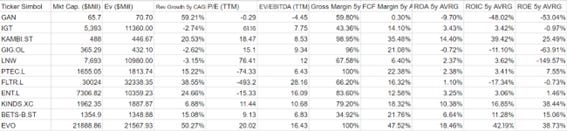
Source: Original version: https://www.svncapital.com/news/evolution. Updated with the new figures by me.
1. Industry and Company Evolution Over the Last Decade: The industry average for Free Cash Flow (FCF) Margin is 16.87%, with a Return on Assets (ROA) of 3.35%, and generally low Returns on Equity (ROE) and Return on Invested Capital (ROIC). Over the past 10 years, despite a decline in capital efficiency metrics largely due to acquisitions, the company has maintained impressive averages of 22.9% in ROE, ROA, and ROIC. The expectation is for above-industry returns, assuming no ill-advised acquisitions. However, the acquisition trend over the last four years poses a potential risk.
2. Potential Impact of Changes or Trends on Future Returns: The company has been setting trends in the industry for the past 5-8 years. A key factor that could impact future returns is capital allocation and the battle for market share. As they've operated almost as a monopoly thus far, any significant competition could force a decrease in returns if their operational excellence and competitive moat are not sufficiently strong.
3. Changes in Business Model and Their Effects: The company’s business model has remained largely consistent but with an increased focus on Random Number Generator (RNG) games in the last 3-4 years. This shift has led to lower capital efficiency and potential capital misallocation. While Free Cash Flow (FCF) growth has slowed, this is not solely due to the business model shift; maintaining extremely high Compound Annual Growth Rates (CAGRs) is a challenge as they grow bigger.
Industry Overview and Key Players
1. Evolution AB: Established in 2006 and listed on the Stockholm stock exchange, Evolution AB boasts a revenue of €1.1 billion in 2021 and an impressive operating margin of 61.2%. With around 16,000 employees, the company has a strong award-winning history, although it lost the ‘Live Casino Supplier’ EGR B2B Award in 2022 to Vivo Gaming after 12 years of consecutive wins.
2. Playtech: Founded in 1999 and listed on the London Stock Exchange with a market cap of about 1.6 billion GBP. Playtech reported revenues of €1.2 billion in 2021, with its B2B segment contributing €554 million. It operates in 26 countries, employs over 6,600 staff, holds more than 180 licenses, and won the ‘Poker Supplier’ EGR B2B Award in 2022.
3. Microgaming: Established in 1994 and acquired by Games Global Ltd in 2022, Microgaming is a private company with licenses in the UK, Malta, and Gibraltar. It has a history of various awards, including the ‘Platform of the Year’ EGR B2B Award in 2020.
4. Pragmatic Play: Part of the IBID Group and founded in 2015, Pragmatic Play is known for its rapid growth in the slots game market and ventured into live dealer games in 2019. It operates under licenses in over 20 jurisdictions and competes with Evolution in terms of game quality and market presence. The company won the ‘Bingo Supplier’ and ‘Casino Software Supplier’ Awards at the EGR B2B in 2022.
5. Vivo Gaming: Started in 2010, Vivo Gaming is a private company and a recognized provider of live dealer games. In 2022, it broke Evolution’s streak by winning the ‘Live Casino Supplier’ EGR B2B Award. The company primarily serves the Latin American market, including countries like Peru, Colombia, and Uruguay, and is less focused on the U.S. market, which is beneficial for Evolution's expansion there.
6. Other Notable Companies: This includes Authentic Gaming (acquired by Light & Wonder, formerly Scientific Games), Play’n GO (which does not offer live dealer games), and regional players like SA Gaming and Asia Gaming, each targeting specific markets like Asia.
Market Value and Growth
The global gaming market is valued at approximately €438 billion, growing at a 1.7% CAGR over the last four years. The online segment is particularly robust, with Europe leading, followed by Asia and North America. The online casino market, worth around €24 billion, is expanding rapidly at a CAGR of 19%, especially in live casino and RNG games.
Evolution's Competitive Edge
Evolution differentiates from Playtech, which has a broader focus and significant retail operations. Evolution's specialization in online casinos leads to higher profitability and market share. Their growth is propelled by advancements in mobile technology and the demand for innovative, customizable gaming options. The transition of land-based casinos to online platforms also contributes to market expansion.
Regulation and Compliance
Navigating regulatory landscapes, especially in Europe and the U.S., is key. Europe is a mature market where Evolution holds a substantial share. In the U.S., state-by-state regulations dictate market expansion pace.
Future Market Projections
The online gambling market is expected to see substantial growth. Live casino, Evolution's primary focus, is among the most attractive industry verticals. With a strong market presence and consistent growth, Evolution is well-positioned for future success in the evolving online gambling landscape.
Customer Analysis
Evolution has a diverse and expanding customer base that includes many global online operators, platform providers, and a growing number of land-based casinos. The company's growth largely comes from its current customers, who often increase their live game offerings, allowing Evolution to enter new markets alongside them.
By the end of 2022, Evolution had over 700 customers, including online operators and land-based casinos. These online operators offer a range of gaming options, such as slot machines, live casino games, sports betting, poker, and bingo. Some of their major customers are DraftKings, Paddy Power, FanDuel, MGM Resorts, and Wynn Resorts.
In 2022, Evolution formed new partnerships and expanded existing ones. Notable new agreements include providing online slots and jackpots for Italy's Sisal, offering a full range of online slots to Holland Casino Online, delivering online casino content to Soaring Eagle Gaming in Michigan, and supplying Live Casino and RNG games to PlayStar in New Jersey. The company also renewed and extended its deal with FanDuel Group to offer live dealer table games across the regulated US online gaming market and expanded other agreements to include more services and tables.
Factors Influencing a Casino Player's Experience
1. Core Elements of Player Experience
Key to a player's casino experience are trust, seamless gameplay, and product innovation. Players expect licensed operators, fast payouts, consumer protection, error-free live games, professional dealers, and fraud prevention.
2. Industry Evolution and Regulation
The industry, historically plagued by fraud and illegal activities, has evolved significantly with regulated markets ensuring game integrity and player safety.
3. EVO's Regulatory Compliance and Trust Building
EVO, a prominent player in the industry, adheres to strict regulatory standards, conducting thorough KYC checks and maintaining high operational standards. Its commitment to upholding international standards, as evidenced by prestigious licenses like that from the Malta Gaming Authority, builds trust and lowers entry barriers for players.
4. Challenges of Live Casino Operations
Running live casino games is complex, involving high-tech streaming across various devices, rigorous staff training, and constant innovation to ensure a high-quality gaming experience. EVO's expertise in these areas, coupled with its dual-play solution, positions it as a leader in both digital and land-based casino operations.
5. EVO's Competitive Edge and Innovation
This expertise is reflected in its ability to secure top-tier operators and maintain high-profit margins in the live casino segment. EVO's innovative culture, driven by customer-first principles, has led to the creation of popular and award-winning games.
6. Impact on Customer Experience and Business Growth
EVO's operational excellence and focus on product innovation ensure a trustworthy and seamless experience for players, driving repeat business for casino operators and bolstering EVO's revenue.
Management
Overview
Evolution Gaming, a leading company in the gambling industry valued at 23 billion EUR, stands out for its strong company culture and strategic focus. The company benefits from a remarkable 15% insider ownership, reflecting a long-term commitment from its management team. CEO Martin Carlesund, with his diverse background in Computer Science, Law, and Finance, is a dynamic leader. He prioritizes market share over EBITDA margins, demonstrating a focus on growth and long-term vision, rather than short-term financial metrics. His ambition for Evolution Gaming is to become one of the best companies globally, across any industry.
Todd Haushalter, the Chief Product Officer, is a key figure in the company’s success. Often compared to Steve Jobs for his innovation in the gambling sector, Todd is deeply invested in enhancing user experience, drawing inspiration from tech giants like Apple, Amazon, and Spotify. His career, rooted in Las Vegas’s gambling scene and culminating in his current role at Evolution Gaming in Sweden, underscores his dedication to the industry. Despite his significant impact, Todd has expressed no desire to pursue a CEO role, focusing instead on creative aspects and game development. This dedication makes him both a vital asset and a potential liability for Evolution Gaming, given his central role in the company's operations.
Overview of Capital Allocation and Management Priorities
In examining the capital allocation and management focus of the company, it's evident that the CEO places a significant emphasis on operational aspects rather than purely on capital allocation. This approach, however, hasn't hindered capital returns, demonstrating effectiveness in their current strategy. Interestingly, the company seems inclined to prioritize market share over margins, a choice that, thus far, appears to be concurrently enhancing value per share. Regarding cash flow, while operating cash flow is a topic of discussion, detailed per-share metrics are notably absent in earnings calls.
Acquisition Strategy and Organizational Culture
The acquisition strategy of the company is bold, with a history of paying high multiples for acquisitions since 2018. This strategy, while aggressive, may reflect a deeper vision of the company's management, particularly in the RNG segment. Here, the management's acumen is noteworthy, suggesting a potential long-term plan that is yet to fully manifest. The organizational structure of the company promotes a decentralized and entrepreneurial environment. This is exemplified by the leadership style of Todd, who is characterized as exceptionally entrepreneurial. The company culture, as described, encourages independent thought and seems to be successful in fostering an innovative mindset across the organization.
Management Tenure and Communication
In terms of tenure, the management team has a robust track record with several key members, including the CEO, COO, CSO, and CFO, who have been with the company for significant periods, ranging from 7 to 18 years. This longevity suggests a stable and experienced leadership. Communication and reporting within the company appear concise and informative, although some changes over time in initiatives and language are observable. There have been shifts in the company's reporting on customer competition and loss, which may warrant attention. However, the company's risk factors have remained consistent, indicating a steady approach to risk management.
Character and Integrity of Management
Assessing the character and integrity of the management, both Todd and Martin stand out for their focus, talent, and commitment, evidenced by their substantial personal investments in the company. The management's ambition and cultural background, predominantly Swedish, contribute positively to their decision-making process. The company's strong track record, with a notable Compound Annual Growth Rate (CAGR) of Tangible Book Value and Free Cash Flow per Share, reflects a competent and value-creating management team.
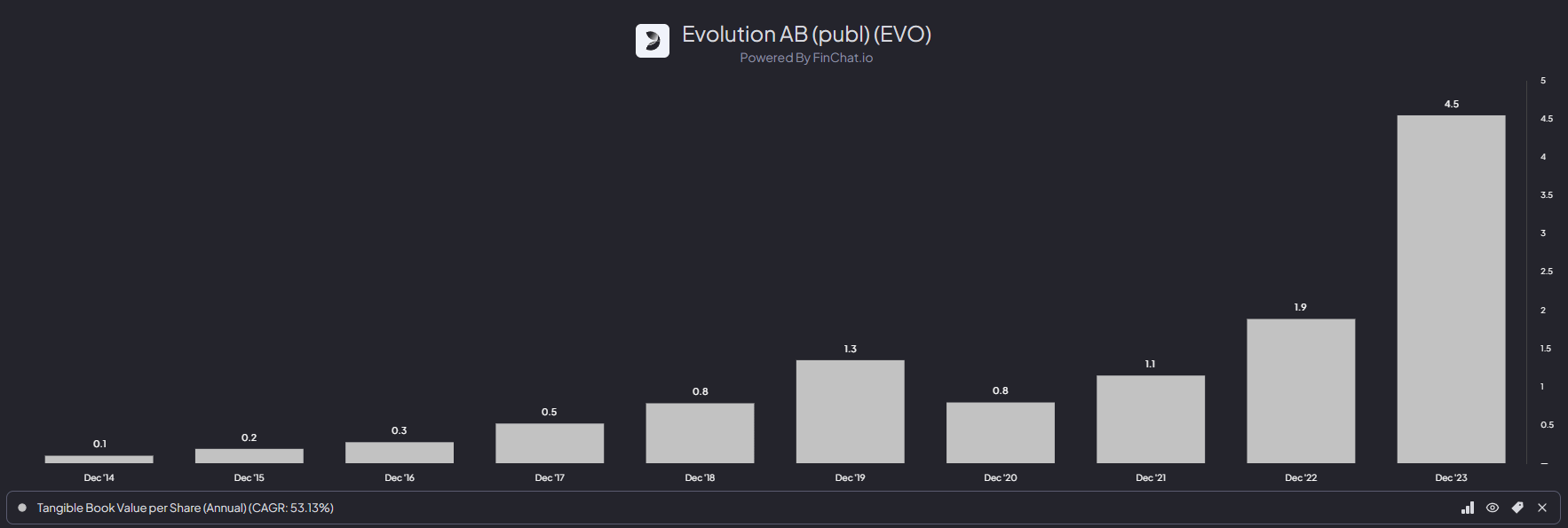
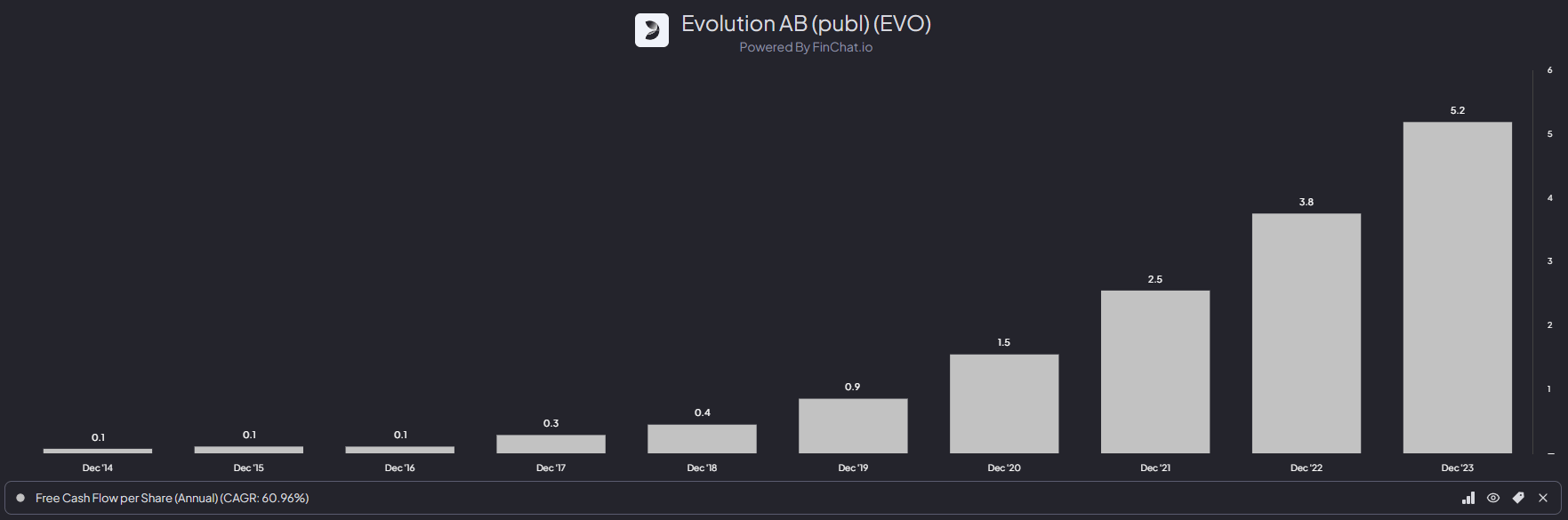
Source: Finchat
Shareholding and Investors:
● The largest shareholder is Capital Group, owning 15.1% of Evolution.
● Österbahr Ventures AB, a joint venture between Jens von Bahr and Fredrik Österberg, holds a 10.4% stake.
● Both Blackrock and WCM Investment Management have a 5.1% stake each.
● CEO bought +/- 9M EUR in EVO share on the 12/11/23
Incentives and Accountability
Lastly, the incentives and accountability structures within the company align with its long-term success. The management's significant financial stake in the company ensures their interests are aligned with those of the shareholders. However, there is a risk that challenges such as slowing growth or reduced demand for their games could push the company towards riskier innovations or acquisitions. Performance-related bonuses and the impact of stock price fluctuations on personal wealth serve as immediate checks on the management's decisions, maintaining a balance between risk and reward.
Evolution's incentive structure for management includes:
● Fixed Salary: Competitive salaries based on individual skills, responsibilities, and performance.
● Variable Compensation: Cash-based and tied to measurable performance criteria.
● Incentive Program: Long-term share and share-price related programs established by shareholders' meetings.
Sustainable Competitive Advantage
The iGaming industry, which brings traditional gambling online, is undergoing a challenging transition similar to early e-commerce, streaming, and music platforms. Despite its simplicity in concept, the move from physical casinos to online poses significant operational and economic challenges. For example, companies like Netflix, Spotify, and Amazon show that leading a digital shift doesn't automatically lead to profitability, despite market dominance.
In iGaming, attracting users goes beyond promotional tactics. It involves navigating unfamiliar games, the risks of real money, and technical reliability. A single technical glitch can significantly impact user trust.
Customer-Operator Relationship
In the iGaming industry, accessing online gambling typically happens through three types of operators:
1. Land-Based Casinos: Traditional brick-and-mortar casinos, like MGM or Caesars, wanting to expand online but lacking expertise or capital. This category includes both large and small operators, the latter leveraging a loyal customer base to transition online.
2. Digitally-Native Casinos: Newer online entrants such as DraftKings and FanDuel in the US, or Unibet and 888 Casino in Europe. Initially focused on sportsbooks, they expanded to offer iGaming services, often outsourcing to utilize their established online user base.
3. Gaming Aggregators: These are less known but crucial. They provide a single platform combining thousands of games from various suppliers, simplifying integration for casinos.
The dynamic between these operators and customers involves intense customer acquisition efforts, evident in the pervasive gambling ads. Acquiring and retaining users is a costly marketing battle, as shown by DraftKings' consistently negative Operating Margin. To attract users, casinos use promotions like free spins or sign-up bonuses, but retaining them is challenging due to low brand loyalty and users' tendency to chase rewards.
Gamblers have a wide array of gambling options, from Blackjack and Roulette to Baccarat, slots, and various game shows. This variety necessitates aggregators that bundle these games into one API, making it easier for smaller casinos to integrate a diverse range of games, while larger casinos often opt for direct integration to reduce costs.
Regulatory compliance is a major challenge, with operators needing to ensure users are in regions where gambling is legal.
Despite the seeming simplicity of setting up a live casino — just a dealer, a camera, and online payment collection — the industry is complex. This complexity raises several questions:
1. Despite online gambling being legal in Europe since the mid-2000s, why do major online casinos like 888 Holdings and Betsson AB use Evolution Gaming's services instead of in-housing them?
2. Why have top US casinos partnered with Evolution Gaming?
3. With Las Vegas Sands building their B2B Live Casino product, will it succeed or struggle financially?
To answer these, we need to delve deeper into the offerings of Live Casino Suppliers and their relationships with casinos, which will be the focus of the next section.
Operator-Supplier Relationship
The Challenge of Digitizing Traditional Casinos:
Land-based casinos, an industry dating back to the 17th century, face a major challenge in moving to the digital realm. While they excel in managing physical experiences like hospitality and security, creating a digital gambling experience is a whole different ball game.
1. User Experience and Technology:
- The digital platform must be engaging and user-friendly, requiring skilled developers.
- Compatibility with various devices and operating systems is essential.
- A wide variety of high-quality games is necessary to keep users interested, similar to the diverse content offered by streaming services.
2. Dealers and Personalization:
- Dealers must be trained to interact with live chats, offering a personal gambling experience online.
- They need to be knowledgeable about both local and global regulations.
- High turnover of dealers is common, requiring constant recruitment and training.
3. Security Concerns:
- Digital platforms face unique security threats, like cheating, which are different from those in physical casinos.
- The platform must be monitored to ensure regulatory compliance and fair play.
Fixed Costs and Risks:
Setting up an online casino involves significant upfront fixed costs and risks. Mistakes can lead to regulatory penalties, customer churn, or exploitation by cheaters.
Partnerships and Revenue Models:
- Branded Services: Casinos can have branded tables with specific UI and outfits, usually funded by the operators.
- Revenue Split: Evolution Gaming, for instance, takes a 4-17% cut of the net revenue from the games. This model is less risky for casinos compared to building and running their own online platforms, which can involve substantial costs and risks.
The maths of the Business
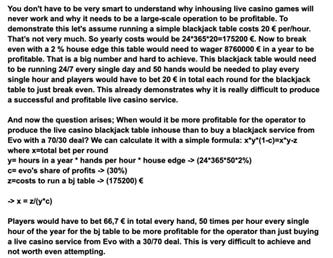
Source:

(highly recommended write-up)
B2B Competition
Evolution Gaming, made attempts to expand into the Random Number Generator (RNG) slot games market but hasn't been very successful so far. In 2020, they bought NetEnt, a Swedish slot provider, for 1.9 billion EUR, and later acquired Big Time Gaming, known for its high 88% EBITDA margins, for 450 million EUR.
Despite these acquisitions, RNG games still make up only a mid-teen percentage of Evolution's total revenue and haven't shown significant growth since the purchases. Evolution's management expects modest revenue growth from RNG games and plans to release more games. However, this strategy hasn't been very fruitful yet, and many shareholders are unhappy with this approach. They believe the company would be better off investing in buying back its own shares, considering them a more valuable investment compared to these acquisitions.
The RNG segment could be seen as a potential bonus for Evolution—if it takes off, great; if not, their core business remains unaffected. While the segment is profitable, the challenge lies in retaining users in a market filled with similar products.
B2B Comparison: Quality in Live Casino
1. Quality Comparison: Among the major players in the industry, there's not much difference in the quality of dealers, user interface (UI), and streaming.
2. Evolution's Edge in Game Innovation: Evolution Gaming stands out for creating the best and most original games. Competitors often try to imitate their game designs quickly.
3. Game Variants: While Evolution may not have the most engaging dealers, it offers a wide variety of games, differing in speed and risk levels, which appeals to a broad range of players.
4. Licensing Popular Titles: Evolution Gaming has rights to well-known names like Monopoly and Deal or No Deal, adding to its appeal.
Evolution Advantage
Evolution Gaming is a leading force in the iGaming industry, a sector where holding user attention directly translates to higher earnings. Unlike Netflix, which aims to retain enough attention to prevent churn and raise prices, iGaming profits increase with more user engagement. Competitors with less than 1% market share struggle to survive, as they can't attract enough players to cover operating expenses.
Evolution Gaming's dominance allows it to:
1. Spread Costs: With a large user base, Evolution can afford to invest more in each game, ensuring higher quality, security, and creativity. This superior game experience attracts and retains more players.
2. Higher Revenue Split: Evolution charges a 10-12% commission on game revenues. Even if competitors offer lower rates, casinos might still prefer Evolution if its games generate significantly higher net revenue, justifying the higher commission.
3. Exclusive Branded Tables: The company can provide dedicated tables with branding for big casinos, a benefit mainly available to larger players in the market.
4. Own Gaming Lobby: Evolution's unique strategy includes an in-game "Exit to Lobby" button that leads players not back to the casino's interface but to Evolution's own gaming lobby. This keeps players within Evolution's ecosystem, encouraging them to play more of its games.
In essence, Evolution Gaming is caught in a positive feedback loop, where its leading position in the industry continues to strengthen over time. The business quality, coupled with an industry structure that rewards the top player, results in excellent unit economics for Evolution.
Reliability and Risk Assessment
1. Regulatory and Licensing Challenges: Evolution's operations, influenced by complex gaming laws in various jurisdictions, rely on a Malta Gaming Authority license for EU countries. However, changing regulations in Europe could necessitate acquiring additional specific licenses, potentially increasing administrative expenses.
2. Operational Complexity: Managing multiple studio locations requires significant investment in real estate, technology, and compliance, affecting cost efficiency. These challenges, while creating barriers for competitors, add to operational complexities.
3. Workforce Dynamics and Expansion Costs: With a substantial workforce in lower-cost countries such as Georgia and Latvia, Evolution's expansion, particularly into the U.S., has led to increased costs due to higher average salaries.
4. Taxation and Global Policies: Benefiting from low corporate taxes in Malta, the company might face increased rates due to global minimum tax initiatives, impacting net profits and cash flow.
5. Customer Reliance and Revenue Stability: A heavy reliance on a few major customers presents risks, as any shifts in their business could significantly affect Evolution’s financial stability.
6. In-House Development vs. Third-Party Advantages: There's a risk of major clients, like casinos, choosing in-house live casino solutions over third-party providers. However, Evolution’s services offer numerous advantages including expertise, cost efficiency, risk management, and access to innovative products.
7. Key Personnel Dependence: The potential departure of key figures, particularly Todd, poses a risk, albeit a low one given his current industry standing.
8. Market Evolution and New Gambling Modes: The uncertainty in how gambling mechanisms will evolve, including the rise of online platforms, could impact traditional gambling landscapes.
9. Technological Adaptation and Medium Change: The transition to new platforms like VR/AR could disrupt current unit economics and market dynamics, necessitating strategic adaptation.
10. Competitive Landscape: Evolution faces competition from both in-house development by casinos and other B2B suppliers, with varying opinions on the impact.
11. Regulatory Landscape in Emerging Markets: The regulatory environment, especially in 'grey' markets, is a significant risk. These markets could become fully legal or illegal, impacting gross gaming revenue.
12. Geographic Revenue Focus and Risks: The growing revenue concentration in Asia presents a double-edged sword, offering growth potential but accompanied by high regulatory risk due to varying local gambling laws.
Analyzing Financial Characteristics
Revenue Composition and Growth Dynamics
Evolution's revenue, primarily from commissions in live and RNG casinos, shows distinct trends. Live Casino, their main strength, contributes 84% of revenue and grew organically by 34% YoY in Q2 2023. In contrast, RNG, accounting for 16% of revenue, saw a 4% decline despite aiming for double-digit growth. Overall, Evolution's revenue rose by 28% YoY to €441.1 million in Q2 2023, driven by increasing commissions from both existing and new customers. The company has achieved a remarkable five-year CAGR of 52%, thanks to its strategy of regularly introducing new games and variations, aligning with evolving player preferences and sustaining market competitiveness.
Regional Revenue Performance
In Q2 2023, Evolution saw double-digit revenue growth in all regions, led by LatAm at 61%, Asia at 48%, North America at 20%, and Europe at 15%. To accommodate rising player numbers in LatAm, Evolution is expanding with new studios in Argentina and Colombia. In North America, they are enhancing their Live game offerings to capture a larger market share. Europe faces high demand for new tables, currently exceeding supply, with plans to resolve this in upcoming quarters.
Cost Analysis and Employee Growth
Evolution's main costs include personnel, facility and studio expenses, and product development. The increase in operating expenses to €159.6 million in Q2 2023, up 23% YoY, was mainly due to higher personnel costs linked to new tables and studios. As of June 30, 2023, the company had 17,447 employees, a 14% increase from the previous year.
Operating Margin Enhancement
Over the years, Evolution has significantly improved its operating margin, increasing from 27% in 2014 to 63% in the trailing twelve months of 2023. This improvement is largely due to economies of scale:
1. Scalable Games: Evolution's games can accommodate an unlimited number of players simultaneously, unlike traditional casino games with fixed player limits. This allows serving a larger player base without the overhead costs typical in physical casinos.
2. Fixed Cost Efficiency: The salary of live dealers, a fixed cost in Evolution's model, is spread across hundreds of potential players, offering better unit economics compared to traditional casinos where dealers serve a limited number of players at a table.
3. High Revenue per Employee: In 2022, Evolution's revenue per full-time equivalent (FTE) was €135k, which is five times the cost per FTE of €27k.
4. No Customer Acquisition Costs: Evolution does not incur customer acquisition costs, unlike casino operators. As players move between operators, they continue to play Evolution's games, allowing the company to benefit from new players without marketing expenses.
EBITDA Margin Record and Dividend Policy
In Q2 2023, Evolution achieved a record EBITDA margin of 70.7%, effectively managing price increases and maintaining operational efficiency. The company continues to seek ways to enhance efficiency and sustain its growth trajectory.
Evolution has greatly exceeded one of its IPO financial goals by achieving an EBITDA margin more than double the target of over 35%. Financially, the company is in a strong position with:
- Over €541 million in cash and equivalents.
- Positive working capital of €753 million.
- A debt to asset ratio of 80%.
- Over €2.2 billion in Goodwill, accounting for 52% of total assets.
- Zero debt.
However, the significant Goodwill, mainly from acquisitions like NetEnt (€1.8 billion in 2020), Big Time Gaming (€450 million in 2021), and Nolimit City (€340 million in 2022), is a concern. The risk of impairment, although not affecting cash flow, could impact earnings, as the Goodwill balance exceeds the total operating profit of the past seven years.
Cash Flow Strength and Dividend Distribution
Evolution has shown exceptional cash flow performance. In the twelve months leading up to the end of Q2 2023, the company generated over €900 million in free cash flow (FCF), achieving a FCF margin of 55%, making it one of the most cash-flow-generative firms in the public markets.
Capitalizing on its cash-rich status and absence of debt, Evolution returns excess cash to shareholders via dividends. The company aims to distribute at least 50% of its net profits over time as dividends. Currently, the dividend payout ratio stands around 46%. However, should the risk of goodwill impairment materialize, affecting profitability, it could influence the dividend as per the existing policy.
Return on Capital Analysis
Between 2013 and 2020, Evolution maintained a high Return on Capital (ROC) between 35% to 45%, thanks to two key factors: its high operating margin, benefiting from economies of scale, and a robust reinvestment runway in the growing live casino market. This allowed efficient cost distribution and enhanced profitability through market expansion, increased clientele, and new game introductions.
However, in 2021, following the acquisition of NetEnt via share issuance, Evolution's ROC initially dropped to 12% before recovering to about 16% by 2023. This decrease was due to the immediate cost impact of acquisitions, with benefits accruing over time. Therefore, even value-creating acquisitions can initially appear less favorable in terms of ROC.
5 KPI’s to keep an eye on ( inspired by ALI GÜNDÜZ’s checklist )
1. Revenue Growth: Year-on-year and quarter-on-quarter growth rates.
2. Operating and Profit Margins: Including both quarterly and last twelve months (LTM) basis.
3. Diluted Earnings Per Share (EPS): Quarterly EPS for assessing annual profitability.
4. Personnel Efficiency: Measured as personnel expense as a percentage of revenue and sales versus salary per employee.
5. CapEx as Percentage of Revenue: To evaluate the efficiency and impact of capital expenditures.
Inflation and Crisis Management
As we delve into the financial resilience of Evolution AB, it's crucial to understand how the company stands amidst inflation and economic crises. When it comes to managing inflationary pressures, Evolution AB appears exceptionally prepared. The company's robust business model demonstrates resilience, suggesting that even during economic downturns, gambling activities might not only continue but potentially increase. This trend could shield the company's financial position from major macroeconomic upheavals. While foreign exchange impacts are an inevitable, hidden cost, the company's overall strategy seems well-aligned to absorb these fluctuations.
A key aspect of Evolution AB's strength lies in its pricing flexibility and asset investment strategy. The company operates with significant margins, providing it with more leeway to handle inflation compared to many others. Being an asset-light business with considerable operating leverage, it possesses a unique product that potentially grants it significant pricing power. The implication is that even a moderate rise in inflation, say around 5%, is unlikely to severely impact its revenues. However, it's worth noting that varying degrees of inflation could influence gambling behaviors differently, either increasing or decreasing them.
Regarding asset investment, Evolution AB requires approximately 10% of its assets, excluding goodwill, to be reinvested annually for operational expansion. This rate is manageable and indicative of the company's proactive approach to growth and adaptation.
When assessing the stock valuation before any crisis, there's a hint that Evolution AB's stock prices might have been somewhat inflated, possibly due to market sentiment and a general bull market atmosphere. However, the extent of this overvaluation isn't precisely quantified.
In terms of preventing or mitigating permanent impairments, the primary concern seems to be the impairment of goodwill. The actual threat level of this impairment to Evolution AB's financial or operational status remains unclear.
Lastly, in the face of a crisis, the company has shown strength by avoiding massive stock dilution. This factor further underscores its financial stability and sound crisis management strategies.
Thesis
First things first
Firstly, considering the straightforward aspects of this business, it stands out due to its high insider ownership and impressive return on incremental invested capital. Alongside this, it maintains low debt levels. I have a clear understanding of its operations, and its current valuation appears to be around fair market value.
Inverting the Thesis: Identifying Undesirables
Adopting Munger's style of inversion, I'm considering what I specifically want to avoid in this investment, aside from the fundamental objective of avoiding permanent capital loss. A primary concern for me is the prospect of management and founders selling their stock, as this could indicate a lack of confidence in the future of the company. It's also crucial that Todd remains with the company; his departure would be a significant loss and a potential red flag. From a strategic standpoint, I'm apprehensive about the company engaging in irrational or overly ambitious acquisitions, which could destabilize its proven track record. Another key concern is the integrity of the management; any serious threat to this integrity would seriously undermine my confidence. Lastly, a high level of capital efficiency is essential; any decrease in this area would raise alarms about the company's financial management and stewardship.
Assuming this investment has already reached its intended outcome, what was the original purpose of making this investment? Does the outcome align with what I initially wanted?
I'm faced with a moral quandary as an investor in the casino industry. My initial motive was, of course, financial gain. But as I delve deeper, the ethical dimensions of this investment become increasingly apparent. In this introspection, I envision two different worlds.
Imagine a world, let's call it World 1, where the shadows of the internet hide a bustling, unregulated world of online gambling. In this world, Evolution AB and its legal, regulated counterparts don't exist. The void left by these absent guardians of fair play is filled by clandestine operators. Here, gambling is a wild, untamed beast. Money laundering runs rampant, cheaters run amok, and the players are left vulnerable, with no one to turn to.
Now, picture a different world, World 2. In this world, companies like Evolution AB stand as beacons in the online gambling landscape. Yes, the allure of gambling still draws in many, and addiction remains a somber reality. But there's a crucial difference. These companies operate in the light, under the watchful eyes of regulatory bodies. They pay their dues in taxes, contributing to the economy. Cheating, while not eradicated, is significantly reduced, as these companies deploy advanced technologies and strict protocols to ensure fair play.
In World 2, the potential harms of online gambling are not eliminated, but they are mitigated. There's a framework in place, a system of checks and balances that makes this world a safer, more accountable space for those who choose to gamble online.
As an investor, when I weigh these two worlds, the choice becomes clear. While online gambling, by its nature, carries inherent risks, the existence and operation of companies like Evolution AB offer a form of control and regulation that is wholly absent in World 1. It's not about championing gambling, but about choosing the lesser of two evils. In a reality where the elimination of online gambling is not feasible, supporting a system that strives for fairness and legal compliance seems, to me, the more responsible path.
Now let’s play devil’s advocate on this thesis:
Promotion of Gambling: By investing in companies like Evolution AB, there is an indirect endorsement of gambling. This can be seen as encouraging an activity that, for many, leads to addiction and financial ruin. The argument that regulation simply makes a potentially harmful activity 'safer' could be likened to putting a band-aid on a larger societal problem.
Regulation Isn't a Panacea: While regulated gambling is certainly more controlled than its illegal counterpart, it's not without its flaws. Regulations can be circumvented, and even within legal frameworks, exploitative practices can persist. There's also the issue of regulatory bodies not being stringent or effective enough, leading to gaps in oversight.
Social and Economic Costs: The social impact of gambling addiction can be devastating, not just for the individual gambler but also for their families and communities. Additionally, the argument that taxes and economic benefits offset the negatives doesn't fully account for the social costs, like mental health issues, bankruptcy, and family breakdowns, which can be a significant drain on social resources.
Ethical Investment Considerations: From an ethical investment standpoint, putting money into the gambling industry can be seen as profiting from others' vulnerabilities. There's a moral question about whether the financial gains from such investments are justified, given the potential for harm to individuals and society.
Normalization of Gambling: By having mainstream, legal entities like Evolution AB in the market, there's a risk of normalizing gambling and making it more socially acceptable, potentially leading to increased participation and, consequently, a higher incidence of gambling-related problems.
Long-term Impact on Society: The argument that regulation merely manages an inevitable activity doesn't address the long-term societal impact of normalized gambling. It raises questions about what kind of activities we, as a society, choose to endorse and the kind of future we are shaping through such endorsements.
In conclusion, while regulation of online gambling through companies like Evolution AB may mitigate certain risks, it doesn't eliminate the ethical, social, and economic issues associated with gambling. These counterarguments highlight the complexity of the issue and the need for a nuanced approach when considering investments in the gambling industry, at the end of the day the only way to answer this as in many complex problems is that you should think for yourself and know where you, as an investor, stand in this particular problem, a highly respected friend of mind won’t touch the casino industry due to moral reason, but he’s comfortable investing in the tobacco industry for example.
Key Predictions for Achieving Outsized Returns
Let's now focus on the critical forecasts that are necessary for this investment to achieve its primary objective of generating outsized returns. Firstly, it's essential that the company maintains and even strengthens its position as a market leader. A key factor in this is the retention of management and key personnel, who, I believe, are likely to stay as they are already part of what is arguably the best company in the industry. Additionally, the company is expected to continue compounding capital at high rates. Another important aspect is the industry trend towards regulating grey and black markets, which could impact the business environment. Based on my research, I assess that there's a reasonable likelihood of these factors aligning favorably.
Destination Analysis
I envision a future, perhaps 10 to 20 years down the line, where Evolution emerges as the foremost provider of online casino services, both live and slots. The critical question then becomes: what actions is the management taking today to increase the likelihood of this future? From my perspective, their intense focus on enhancing entertainment value and prioritizing customer needs plays a significant role in making this vision a reality. However, there are hurdles, such as competition and poor capital allocation, which could potentially derail this outcome. Conversations with several employees have revealed a general satisfaction with their compensation and a positive outlook on the company’s future and its management.
In summary, if I were to distill my investment decision into key points, they would be: 1) This is a top-tier business characterized by excellent management and substantial insider ownership. 2) Recent perceived missteps with short-term impacts, coupled with an overall negative market sentiment, have made its valuation attractive. 3) The company's proven track record and promising future prospects stand out as particularly compelling.
Reasons to Sell
With Evolution AB, the decision to sell should not be taken lightly or based on short-term market fluctuations. A mere decline in the stock price is not, in my view, a sufficient reason to sell, especially for a company like Evolution. Similarly, a short-term spike in the stock price should also be disregarded. The essence of a sound investment decision lies in the quality of the business and its fundamentals. If these remain strong, there is little reason to be swayed by the daily "voting machine" of stock prices. Evolution AB, with its robust business model, represents the kind of company you should be able to confidently hold for a decade or more.
However, there are certain scenarios where selling might become a consideration. These reasons are more substantial and reflective of deeper changes either in the company or in the investor's own criteria. They include:
1. Ethical Concerns: If holding the stock begins to cause sleepless nights due to ethical issues that arise during the investment period, it may be time to reconsider. The peace of mind that comes with ethical investing is invaluable.
2. Change in Investment Criteria: If there's a significant shift in your investment criteria and Evolution AB no longer aligns with these revised standards, it would be prudent to reassess your position in the stock.
3. Reassessment After New Information: Certain events or revelations about the company might prompt a reevaluation. These could include factual errors discovered in the company’s background, key personnel changes like Todd leaving, signs of instability such as massive insider selling or stock dilution, questionable acquisitions, a notable decline in capital efficiency, or evidence of a lack of integrity among the management team.
Where to find me!
● Youtube